
Podcast: Play in new window | Download | Embed
Would you rather read the transcript? Click here.
It’s great to be back with you all as we continue this deep dive into the world of autism and neurodivergence. Today, we are tackling a topic that has really taken the clinical world by storm over the last several years, and that is the concept of camouflaging and masking. Honestly, this is one of those areas where the research is moving so fast it can be hard to keep up, but it is also deeply personal for so many of the folks we see in our offices. I wanted to take some time to really look at the literature: what we actually know, what we think we know, and where the holes are. Because as much as we talk about “masking,” the science behind it is actually a lot more nuanced and a lot more complicated than it might seem on the surface.
Main Topics
- 00:01: Defining camouflaging as the conscious or unconscious strategies used to hide or compensate for autistic characteristics in social settings
- 01:45: The three core components of camouflaging: compensation, masking, and assimilation according to the Hull et al. (2019) framework
- 04:10: Methods for measuring camouflaging, including the CAT-Q self-report measure and the discrepancy method between cognitive ability and observed traits
- 06:45: The weak correlation between self-report and discrepancy measures and what that tells us about intention versus effectiveness
- 08:15: Prevalence of camouflaging in autistic versus non-autistic populations and its role as a broader form of impression management
- 10:20: Sex and gender differences in camouflaging and why females consistently report higher scores across studies
- 12:40: The significant mental health impact of camouflaging, including burnout, identity confusion, and suicidal ideation
- 15:15: Critical validity concerns regarding the CAT-Q and potential construct overlap with social anxiety
Cool Things Mentioned
- Craft: the premier membership community for testing psychologists
- Crafted Practice: the only in-person business retreat for testing psychologists
- Reverb: the premier AI-powered report-writing platform for testing psychologists
Featured Resources
TherapyNotes is the leading EHR system for mental health practitioners. I’ve used TherapyNotes for over 10 years, and it just keeps getting better. Use this link and the promo code “testing” to get two free months and try it for yourself! www.therapynotes.com/testing
NovoPsych brings 150+ standardized measures into one platform. If you’re interested in high quality measures for personality, disability, ADHD or Autism, try NovoPsych with a 15-day free trial via this link: https://novopsych.com/testingpsychologist
The Testing Psychologist podcast is approved for CEU’s!
I’ve partnered with At Health to offer CE credits for podcast episodes! Visit this link to access current and past episodes available for CE credit. You can use code “TTP10” for a discount on ALL the course credits you purchase from At Health!
About Dr. Jeremy Sharp
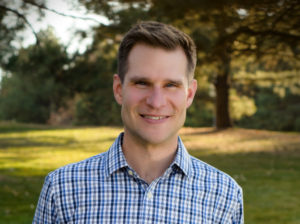
I’m a licensed psychologist and Clinical Director at the Colorado Center for Assessment & Counseling, a private practice that I founded in 2009 and have grown to over 20 clinicians. I earned my undergraduate degree in Experimental Psychology from the University of South Carolina before getting my Master’s and PhD in Counseling Psychology from Colorado State University. These days, I specialize in psychological and neuropsychological evaluation with kids and adolescents.
As the host of the Testing Psychologist Podcast, I provide private practice consulting for psychologists and other mental health professionals who want to start or grow psychological testing services in their practices. I live in Fort Collins, Colorado with my wife (also a therapist) and two young kids.
Ready to grow your testing services? Click below to get on the waitlist!
Comments 5
YEEEEEEEEEEEEEEEEEEEEEEESSSSSSSS!!!!
Author
Sounds like you enjoyed this episode!
You did a great job summarizing a really complex subject. Any chance you could share the resources you mentioned? This is my dissertation area and I’d love to see if you have any studies I haven’t found yet.
Author
Thank you! Here’s a list of references that I used:
1.
A Meta-Analytic Review of Quantification Methods for Camouflaging Behaviors in Autistic and Neurotypical Individuals.
Scientific Reports. 2025. Cancino-Barros I, Villacura-Herrera C, Castillo RD.
2.
Camouflaging in Autism: A Systematic Review.
Clinical Psychology Review. 2021. Cook J, Hull L, Crane L, Mandy W.
3.
The Dimensional Structure of the Camouflaging Autistic Traits Questionnaire (CAT-Q) and Predictors of Camouflaging in a Representative General Population Sample.
Comprehensive Psychiatry. 2024. Ai W, Cunningham WA, Lai MC.
4.
The Workplace Masking Experiences of Autistic, Non-Autistic Neurodivergent and Neurotypical Adults in the UK.
PloS One. 2022. Pryke-Hobbes A, Davies J, Heasman B, et al.
5.
Camouflaging in Autistic and Non-Autistic Adolescents in the Modern Context of Social Media.
Journal of Autism and Developmental Disorders. 2022. Jedrzejewska A, Dewey J.
6.
Camouflaging in Autism Spectrum Disorder: Examining the Roles of Sex, Gender Identity, and Diagnostic Timing.
Autism : The International Journal of Research and Practice. 2022. McQuaid GA, Lee NR, Wallace GL.
7.
A Comparison of Self-Report and Discrepancy Measures of Camouflaging: Exploring Sex Differences in Diagnosed Autistic Versus High Autistic Trait Young Adults.
Autism Research : Official Journal of the International Society for Autism Research. 2023. Milner V, Colvert E, Mandy W, Happé F.
8.
Camouflaging in Autism: Age Effects and Cross-Cultural Validation of the Camouflaging Autistic Traits Questionnaire (CAT-Q).
Journal of Autism and Developmental Disorders. 2024. Lundin Remnélius K, Bölte S.
9.
A Comparison of Methods for Measuring Camouflaging in Autism.
Autism Research : Official Journal of the International Society for Autism Research. 2023. Hannon B, Mandy W, Hull L.
10.
Validation of the Camouflaging Autistic Traits Questionnaire Short Form (CATQ-SF).
Comprehensive Psychiatry. 2024. Hull L, Mandy W, Belcher H, Petrides KV.
11.
Development and Validation of the Camouflaging Autistic Traits Questionnaire (CAT-Q).
Journal of Autism and Developmental Disorders. 2019. Hull L, Mandy W, Lai MC, et al.
12.
French Validation of the Camouflaging Autistic Traits Questionnaire (CAT-Q).
Journal of Autism and Developmental Disorders. 2024. Bureau R, Riebel M, Weiner L, et al.
13.
Validation of the Italian Version of the Camouflaging Autistic Traits Questionnaire (CAT-Q) in a University Population.
Comprehensive Psychiatry. 2022. Dell’Osso L, Cremone IM, Muti D, et al.
14.
Commentary: The Construct Validity of ‘Camouflaging’ in Autism: Psychometric Considerations and Recommendations for Future Research – Reflection on Lai Et al. (2020).
Journal of Child Psychology and Psychiatry, and Allied Disciplines. 2022. Williams ZJ.
15.
Camouflaging and Autism: Conceptualisation and Methodological Issues.
Autism : The International Journal of Research and Practice. 2026. Arnold WM, Bitsika V, Sharpley CF.
16.
Understanding the Relationship Between Social Camouflaging in Autism and Safety Behaviours in Social Anxiety in Autistic and Non-Autistic Adolescents.
Journal of Child Psychology and Psychiatry, and Allied Disciplines. 2024. Lei J, Leigh E, Charman T, Russell A, Hollocks MJ.
17.
Reconsidering Autistic ‘Camouflaging’ as Transactional Impression Management.
Trends in Cognitive Sciences. 2022. Ai W, Cunningham WA, Lai MC.
18.
Intentional Use and Self-Efficacy as Distinct Facets of Impression Management and Their Relationships With Socio-Motivational, Cognitive, and Mental Health Factors.
Scientific Reports. 2025. Ai W, Wang YA, Cunningham WA, Lai MC.
19.
What We Know and Do Not Know About Camouflaging, Impression Management, and Mental Health and Wellbeing in Autistic People.
Autism Research : Official Journal of the International Society for Autism Research. 2025. Khudiakova V, Alexandrovsky M, Ai W, Lai MC.
20.
Psychosocial Factors Associated With Camouflaging in Autistic People and Its Relationship With Mental Health and Well-Being: A Mixed Methods Systematic Review.
Clinical Psychology Review. 2023. Zhuang S, Tan DW, Reddrop S, et al.
21.
A Systematic Review of Social Camouflaging in Autistic Adults and Youth: Implications and Theory.
Development and Psychopathology. 2025. Klein J, Krahn R, Howe S, et al.
22.
Camouflaging, Internalized Stigma, and Mental Health in the General Population.
The International Journal of Social Psychiatry. 2024. Ai W, Cunningham WA, Lai MC.
23.
Commentary: ‘Camouflaging’ in Autistic People – Reflection on Fombonne (2020).
Journal of Child Psychology and Psychiatry, and Allied Disciplines. 2021. Lai MC, Hull L, Mandy W, et al.
Thank you so much!